
A Legacy Worth Building On:
Twenty-five years is a long time to build trust in a city.
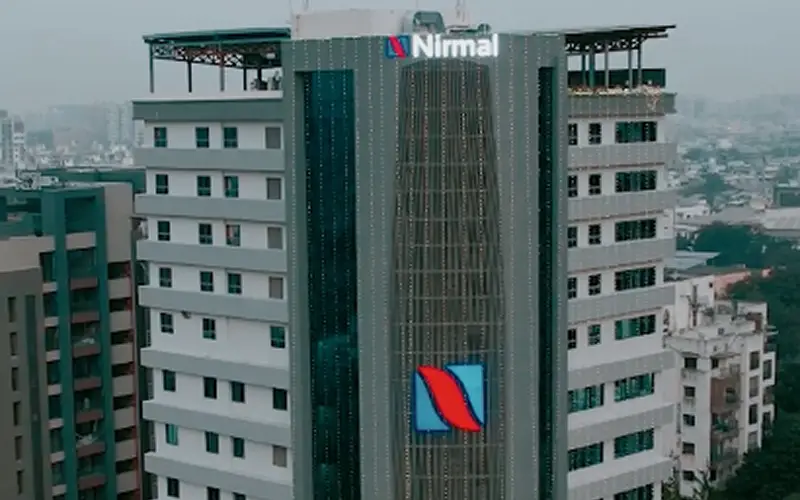
For Nirmal Hospital in Surat, that trust was built one pediatric patient at a time over two and a half decades of clinical care that made the hospital a name family in the city knew and relied on. That legacy was not something to walk away from. It was something to build on.
So, when the decision came to expand to evolve from a focused pediatric institution into a 110-bed multispecialty facility offering cardiology, critical care, and advanced diagnostics it was not a leap of faith. It was a considered, strategic call. The vision was clear. The ambition was right sized for the market. The capital was available.
What was not yet clear was whether the planning could keep pace with the ambition.
When Ambition Outruns Alignment:
Multi-speciality expansion looks straightforward on paper, but the problem is rarely about infrastructure.
The reality is more complicated and the complications almost never announces themselves early. They surface mid-construction, when an ICU layout designed around one equipment configuration needs to be reworked because the actual dimensions came in differently. They surface in procurement meetings, when equipment is being ordered for a patient volume the hospital will not see for two years. They surface in finance reviews, when capital has already been deployed against a construction site that is not ready to receive it.
At Nirmal Hospital, the challenges were exactly this kind, it’s not about setbacks in vision, but setbacks of alignment. Clinical ambition was moving faster than space planning could accommodate. Equipment selection was out spacing realistic utilisation projections. And the procurement timeline was running ahead of construction readiness in ways that left unaddressed would have locked up capital and compressed the commissioning window.
These are not unusual problems. They are the standard problems of every hospital expansion that moves fast and plans in silos. What is unusual is catching them early enough to do something about it.
| THE THREE ALIGNMENT GAPS THAT DERAIL HOSPITAL EXPANSIONS |
| 01 Clinical ambition moving faster than space planning can accommodate |
| 02 Equipment selection outpacing realistic utilisation projections |
| 03 Procurement timing disconnected from construction readiness |
The Question That Reframed Everything:
The intervention began not with a procurement lan but with a question: What does this hospital need to be in its first two years of operation not its fifth?
That question reframed from everything.
One of the most significant challenges was that the client was transitioning from a well-established pediatric hospital to a multispecialty institution without prior experience in planning advanced clinical infrastructure. Unlike a single-specialty hospital, a multispecialty facility requires far more complex decisions around medical technologies, equipment specifications, interoperability, and long-term clinical scalability. These were areas where the client had limited visibility.
Sugilite worked closely with specialist clinicians, peer doctors, and academic faculty across multiple disciplines to identify the right technology platforms, equipment specifications, and clinical requirements for the proposed services. The challenge was not only selecting the right technologies but also helping the leadership understand why these investments mattered and how they would support future clinical growth.
Equally important was preparing the existing hospital team for this transition. Sugilite connected the project with leading medical equipment manufacturers and industry partners, facilitating demonstrations, technical discussions, and structured training sessions that enabled doctors, nurses, and technical staff to become familiar with the new systems well before commissioning.
Equipment strategy was rebuilt around realistic clinical throughput the patient volumes Nirmal could credibly expect to see in its early operational phase, not the aspirational numbers that had been guiding vendor conversations. ICU and CCU layouts were treated as working documents rather than fixed blueprints, refined in real time as construction progressed and equipment dimensions were confirmed. Procurement progressed and equipment dimensions were confirmed. Procurement was synchronised to construction milestones – no purchase order was placed until the civil and electrical infrastructure was ready to receive it.
And alongside commercial negotiations, Sugilite acted as the bridge between clinical vision, technology providers, and hospital operations—bringing market intelligence, vendor benchmarking, equipment expertise, and implementation support into a single coordinated process.
None of this was dramatic. There were no moments of crisis averted at the last minute. What there was, consistently, was a discipline of alignment ensuring that every decision being made about equipment, layout and procurement was being made in conversation with every other decision, not in isolation from it.
That discipline is harder to maintain that it sounds. And it is almost impossible to maintain from the inside.
What December 2024 Looked Like:
Nirmal Hospital became operational in December 2024.
In the months that followed, occupancy ramped to approximately 50% a strong early performance for a newly launched multispecialty facility in a competitive urban market. The cardiology department, the centrepiece of the expansion established a patient pipeline that validated the clinical and infrastructure decisions made during planning. The commercial case for a second catheterisation lab evaluated.
These are not simply good numbers. They are the direct result of decisions made months before the first patient walked through the door decisions about what to build, what to buy, when to buy it and at what scale.
That is where hospital performance actually determined. Not at launch. Long before it.
| NIRMAL HOSPITAL | PROJECT SNAPSHOT |
| Location | Surat, Gujarat |
| Legacy | 25 years of dedicated pediatric care |
| Expansion | 110-bed multispecialty facility |
| Specialties | Cardiology · Critical Care · Advanced Diagnostics |
| Operational | December 2024 |
| Occupancy | ~50% in early operational phase |
| Cardiology | Strong patient pipeline established |
| Next Phase | Second Catheterisation Lab under evaluation |
The Lesson Behind the Numbers:
Nirmal Hospital’s story is not unique in its ambition. Across India’s Tier-2 and emerging cities, there are dozens of hospital promoters making the same considered decision to expand, to diversify, to meet that healthcare demand their communities are generating. The capital is available. The clinical vision is sound. The market is real.
What is rarely in place is the connective tissue between vision and execution the discipline of ensuring that clinical planning, infrastructure design, equipment strategy and procurement timing are not four separate work streams moving at four separate speeds, but one aligned process moving toward one operational outcome.
That connective tissue does not appear automatically. It must be built deliberately, early and by people who understand what misalignment costs before it becomes visible.
Most of the time, it becomes visible too late.
The hospitals that open well that ramp occupancy quickly, that validate their clinical bets in the first year, that are already planning their next phase before the paint on the first phase is dry are not the ones with biggest budgets or the most ambitious blueprints. They are the ones where someone asked the hard about alignment before the first wall went up.
At Nirmal Hospital, those questions were asked. The answers shaped everything that followed.